
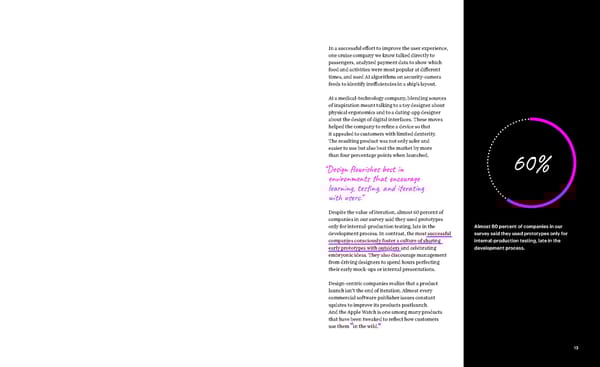
In a successful effort to improve the user experience, one cruise company we know talked directly to passengers, analyzed payment data to show which food and activities were most popular at different times, and used AI algorithms on security-camera feeds to identify inefficiencies in a ship’s layout. At a medical-technology company, blending sources of inspiration meant talking to a toy designer about physical ergonomics and to a dating-app designer about the design of digital interfaces. These moves helped the company to refine a device so that it appealed to customers with limited dexterity. The resulting product was not only safer and easier to use but also beat the market by more than four percentage points when launched. Despite the value of iteration, almost 60 percent of companies in our survey said they used prototypes only for internal-production testing, late in the development process. In contrast, the most successful companies consciously foster a culture of sharing early prototypes with outsiders and celebrating embryonic ideas. They also discourage management from driving designers to spend hours perfecting their early mock-ups or internal presentations. Design-centric companies realize that a product launch isn’t the end of iteration. Almost every commercial software publisher issues constant updates to improve its products postlaunch. And the Apple Watch is one among many products that have been tweaked to reflect how customers use them in the wild. "Design flourishes best in environments that encourage learning, testing, and iterating with users." Almost 60 percent of companies in our survey said they used prototypes only for internal-production testing, late in the development process. 60% 13
 The Business Value of Design Page 26 Page 28